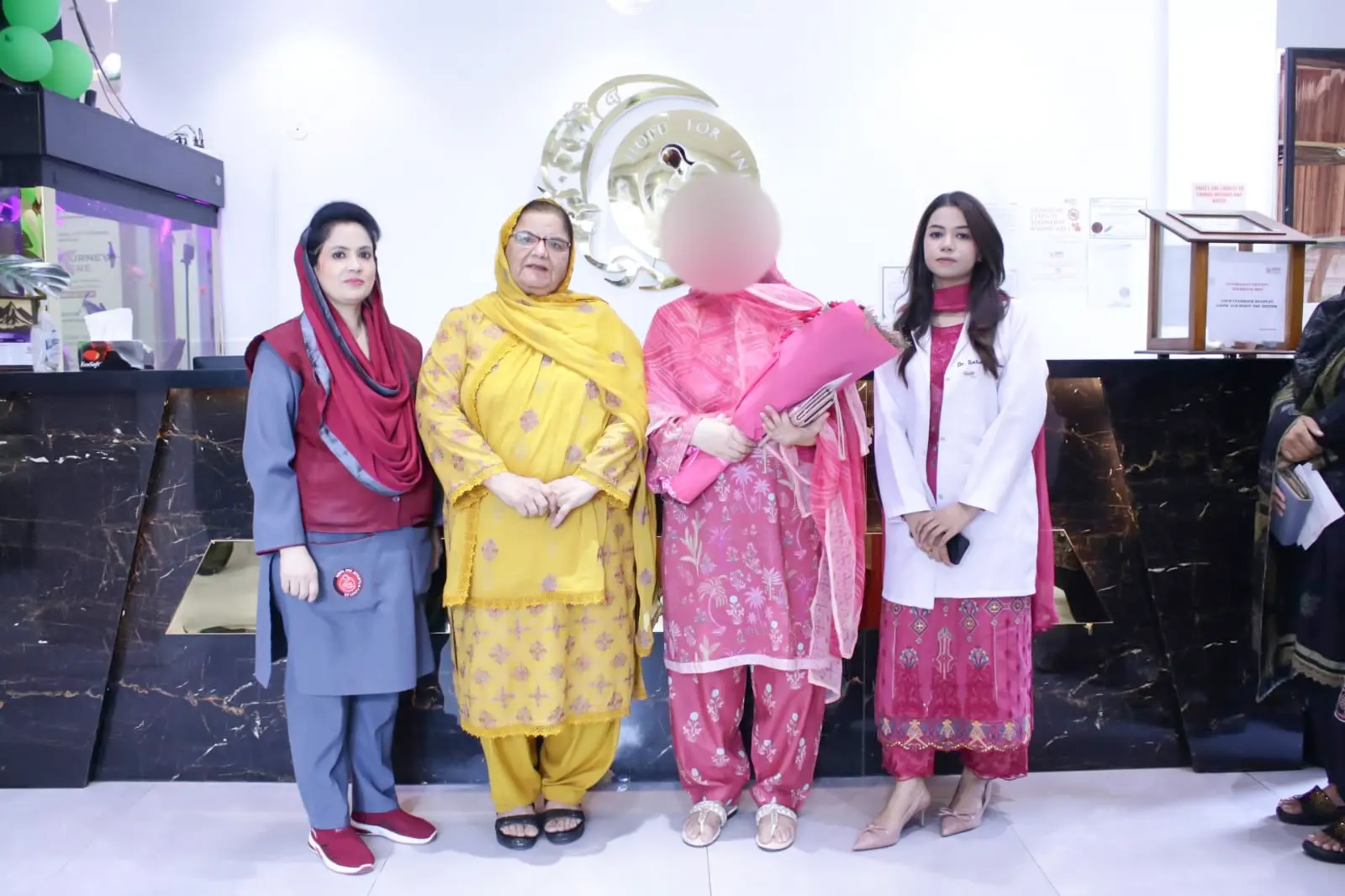

In-vitro fertilization (IVF) is a widely performed assisted-reproductive procedure that helps couples struggling with infertility conceive. ICSI—Intracytoplasmic Sperm Injection is a part of IVF.
The procedure involves all the steps of a standard IVF process except the fertilization. In ICSI, a healthy sperm is selected and injected into the mature egg instead of leaving it in a laboratory dish to fertilize overnight.
At Australian Concept in Lahore, Intracytoplasmic Sperm Injection is performed in case of male infertility or when the sperm and eggs do not fertilize naturally in an incubator.
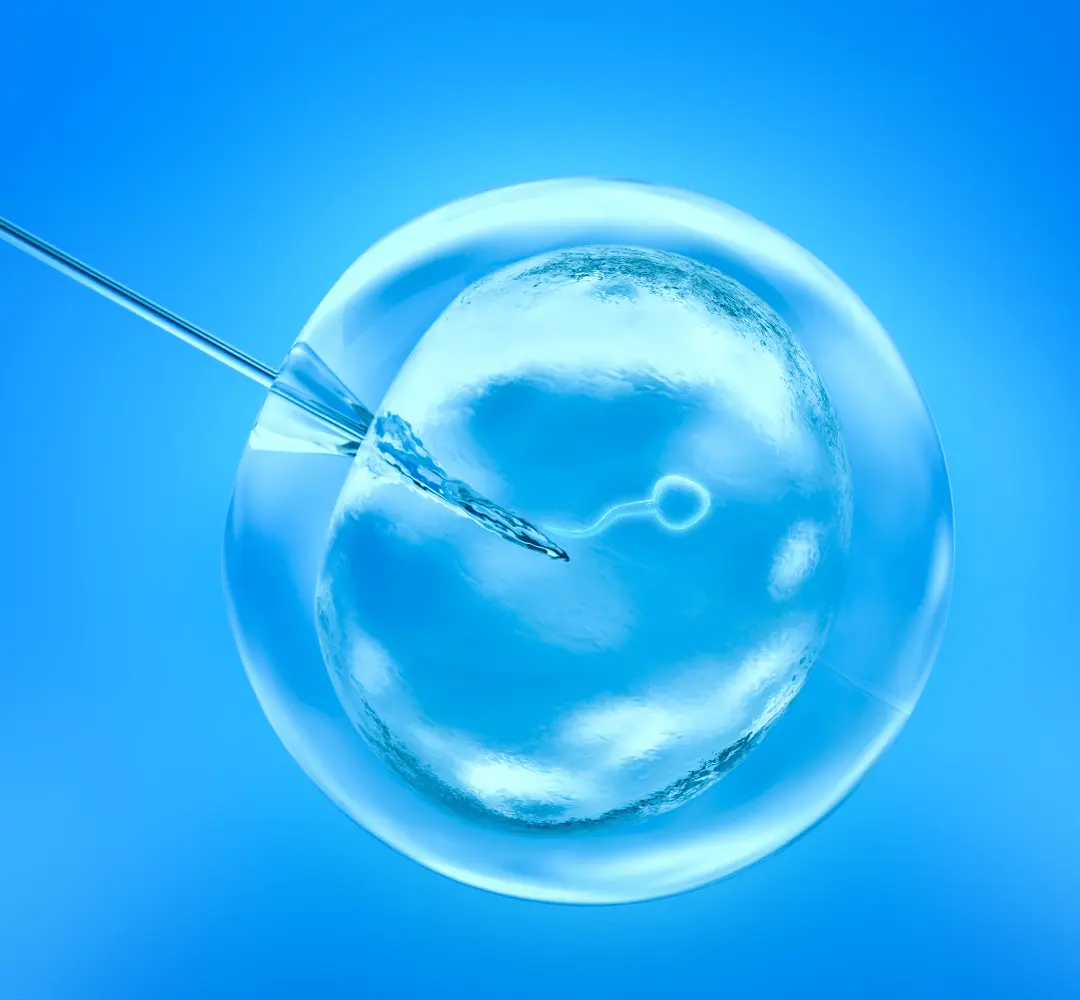
ICSI treatment aims to increase your chances of conceiving through IVF by improving the success rate of fertilization. We offer ICSI in Lahore, Pakistan. Our team of ICSI specialists is qualified to execute the procedure precisely. We keep you informed about every step.
Here’s the step-by-step ICSI process:

Your healthcare provider will order an ultrasound or conduct a physical test to check your reproductive health. They will look for the signs of blocked fallopian tubes, endometriosis, ovarian cysts, and other reproductive conditions that might cause female infertility.
You need to take hormonal shots from the second or third day of your period for 10-12 days to release multiple mature eggs from your ovaries. In each ovulation cycle, a woman’s ovaries release one healthy egg. However, for an IVF procedure, hormonal drugs are used to retrieve multiple eggs, thus increasing the chance of fertilization.
Egg retrieval involves the extraction of mature eggs from your ovaries through a minimally invasive procedure. On the same day, the male partner is asked to send their semen sample. The doctor will analyze the semen and choose either the natural fertilization process or ICSI (if the sperm count in the semen is low).
These embryos will be put in a petri dish for 5-6 days following the ICSI procedure. The embryologist creates an environment where embryos can grow normally and reach the blastocyst stage. At this point, your healthcare provider will prepare you for the final step of the fertility treatment, i.e., the transfer of the embryo into your uterine lining.
ICSI is not performed in all IVF fertility cases. It’s needed in the case of male infertility or when the previous IVF cycles have failed. Some ICSI indications include poor-quality sperm, a genetic disorder, ejaculatory dysfunction, and failed fertilization in a standard IVF procedure. ICSI is also performed if the couple chooses PGD (preimplantation genetic diagnosis).
IVF is a fertility treatment that may or may not involve ICSI. Whether or not your case requires Intracytoplasmic Sperm Injection depends on the quality of the woman’s eggs and the male’s sperm.
The difference between IVF and ICSI lies in the fertilization technique. The former involves placing the egg and sperm in close proximity in a controlled environment, and fertilization occurs naturally when the two combine. ICSI involves manual injection of the sperm into eggs to increase the fertilization chances.
ICSI is mainly recommended in cases of male infertility, but can also help couples facing other fertility problems. Couples based in Lahore can reach out to the Australian Concept’s fertility experts to identify the cause of their infertility and know if they are a good fit for Intracytoplasmic Sperm Injection. Here’s who needs ICSI treatment:
People With:
ICSI success in Lahore is between 50 and 80 percent, but like any medical procedure, there is a chance that the procedure might fail. ICSI is quite effective in increasing your chances of conceiving. However, it’s only a part of the IVF treatment.
There are many factors affecting the outcome of in-vitro fertilization, such as maternal age, genetic disorders in couples, and the mother’s reproductive health. ICSI success rate might contribute to the outcome of IVF procedures, but it alone won’t guarantee a healthy and viable pregnancy. At Australian Concept, we focus on improving your chances of conception through Assisted Reproductive Technology. If required, we perform ICSI to help with fertilization.
While ICSI improves the fertility odds in infertile partners, the procedure comes with risks. Here are some ICSI treatment risks you must be aware of.
We do our best to minimize the risks of ICSI treatment. Our proficient embryologists carefully execute the process, helping us achieve maximum ICSI treatment success rate in Lahore.
The success rate of ICSI also depends on the IVF center you choose. Australian Concept Infertility Medical Center is, so far, the best IVF clinic in the country. They have delivered 15000+ babies through IVF and have performed numerous ICSI procedures to increase the fertilization success rate in couples who can’t conceive naturally.
ICSI is a complex procedure requiring an expert embryologist who can inject sperm into an egg and keep it in a closely monitored environment to achieve the highest success rate for fertilization. ICSI treatment cost in Pakistan varies from clinic to clinic and patients history. Visit our clinic or call us for a quote for ICSI and IVF procedures.
For First free Consultation in Lahore Book Now!
ICSI stands for Intracytoplasmic Sperm Injection. It is a specialized form of IVF used primarily to treat severe cases of male infertility. During ICSI, a single sperm is injected directly into an egg to facilitate fertilization, which can then be implanted into the uterus. This technique is particularly useful when there are issues with sperm quality or quantity, such as low sperm count or poor motility.
Male Factor Infertility: Severe male infertility issues, such as low sperm count, poor sperm motility, or abnormal sperm morphology.
Previous Fertilization Failure: Couples who have experienced failed fertilization attempts with traditional IVF.
Pre-implantation Genetic Testing: When genetic testing of embryos is necessary before implantation.
Certain Female Infertility Cases: Including poor egg quality or unexplained infertility.
The success rate of ICSI treatment in Lahore, Pakistan ranges from 50% to 80%. Specific clinics report success rates of 65% to 70%.
Yes, most babies born through Intracytoplasmic Sperm Injection (ICSI) are normal, and their growth is comparable to that of babies born naturally. ICSI is when a healthy sperm cell is injected directly into the egg to increase the chances of fertilization.
Research shows that there’s no major difference in the rate of congenital malformations found in babies born via ICSI or standard IVF. Most ICSI babies have normal growth patterns. They attend schools and live normal lives, just like other healthy babies.
That said, there’s a small risk of congenital birth defects, but they are very rare. Besides, any genetic issues in the baby (if they occur) are mostly because of the underlying health issue in the father and not the procedure itself.
There’s no standard number of cycles that works for all. Some may conceive sooner, i.e., within the first ICSI cycle, others may take longer, up to 2-3 cycles, especially if there are complex male infertility issues. Ideally, your doctor may want to try 2-3 cycles before re-examining.
No. ICSI is not a separate treatment, but a part of the IVF journey. Here’s how it works.
IVF is a comprehensive treatment divided into multiple steps. It involves ovarian induction, maturation shot, egg retrieval, fertilization, and embryo transfer. The fertilization part can be done naturally, i.e., egg and sperm are placed in a petri dish where they fertilize overnight. Or, they can be manually fertilized, with a single sperm cell being directly injected into the egg. That’s ICSI.
Without IVF, the egg can’t be retrieved. ICSI requires an egg for fertilization. In a nutshell, there’s no medical technology that can help you conceive with ICSI without IVF. Emerging technology or experimental procedures have been focusing on less-invasive ways to help you conceive, but so far, you can’t get pregnant with ICSI alone.
There’s a chance ICSI may work on the first attempt, but success is not guaranteed. The success rate is 20-40% on the first attempt, but this might vary heavily depending on your age, health, and fertility status. Good-quality eggs might be fertilized on the first ICSI attempt. On the other hand, low sperm count, poor sperm quality, or even poor egg quality can affect embryo development.
Additionally, underlying medical issues, such as polycystic ovarian syndrome, endometriosis, or hormonal imbalances, can also influence the results. Proper timing, as well as an embryologist’s experience, also play a role. The success rates are higher in a well-ventilated, well-equipped, and modern embryology lab.
There are a few reasons that result in ICSI failure.
ICSI is an invasive procedure where the needle punctures the egg to place sperm in it. There’s a small chance, around 5-10%, that the egg could get damaged during the process. Sometimes, the needle damages the internal structure of the egg. In other cases, the egg itself is too fragile to handle manual sperm injection.
Sometimes, the egg hasn’t reached maturity. Such eggs do not respond to ICSI. Lastly, technical factors also play a major role. Poor lab conditions or poor handling of the gametes can lead to egg damage. The risk, however, is minimized when you choose the right fertility center in Pakistan.

116 Babar Block, New Garden Town, Barkat Market, behind Salaar Centre, Lahore.
Kindly fill in the form below and your nearest Australian Concept Clinic will respond within 1 hour of receiving your request.
The Australian Concept Infertility Medical Center Lahore “Australian Concept” was established in 1998 with Australian technical collaboration in Karachi, Pakistan.
Fertility Services
Free Consultation
Copyright © 2023Australian Concept | Best IVF Center in Pakistan.