
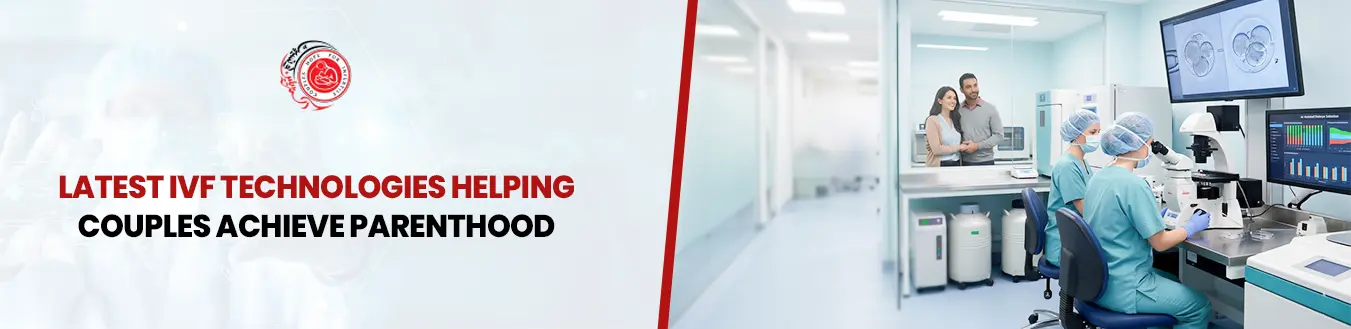
Infertility. The term sounds intimidating for every couple who finds it difficult to get pregnant naturally. Whether it’s due to PCOS, uterine anomalies, or sperm-related issues, infertility can feel overwhelming. The good news? Modern medical advancements have brought a remarkable change in fertility care.
In vitro fertilization is the perfect example. From single-digit success rates to nearly 50% of couples achieving pregnancy through IVF, the technology has witnessed many incredible changes since the first IVF baby was born in 1978. The latest AI-driven innovation in fertility has enabled fertility experts to maximize IVF success rates.
The goal is to make treatment not only successful but equally efficient, comfortable, and safer for couples. In this post, we’ve covered how modern AI-powered IVF procedures will be the new future of fertility treatments.
IVF Technology: From Manual Grading to AI-Assisted Embryo Monitoring
IVF or In-Vitro Fertilization is an advanced assisted reproductive technology that focuses on helping couples achieve pregnancy outside the uterus, in a specialized laboratory. Gametes are combined in a petri dish for fertilization. Once the egg is fertilized, one or more of them are transferred into the uterus.
IVF dates back to 1978, when the first baby named “Louise Brown” was born through ART. Since then, up to 13 million babies have been born worldwide through Assisted Reproductive Technology. However, IVF was not as advanced then as it is today. Laboratories weren’t specialized, technology was limited, and success rates were relatively low compared to double-digit success rates today.
Modern fertility treatments involve gentler ovarian stimulation protocols, AI-powered embryo analysis, cryopreservation, ICSI, and genetic screening.
IVF Procedures: The Popular Ones
Standard Procedure
The standard one involves the basic IVF steps, which include:
- Ovarian Induction: The first step is stimulating your ovaries to produce multiple mature eggs at once, instead of a single one in an ovulatory cycle. This is done through hormonal medication, which is continuously administered for over 8-14 days. During this period, ultrasound scans are used to monitor ovarian response and follicular growth.
- Egg Retrieval: The doctor gives a final trigger shot that matures eggs in the ovaries. Once the eggs mature, they are retrieved through a small surgical procedure.
- Fertilization: The eggs are then placed with sperm in a petri dish for a few hours, allowing them to fertilize naturally. In some cases, an advanced fertilization procedure called Intracytoplasmic Sperm Injection (ICSI) may be needed to fertilize an egg.
- Embryo Transfer: The healthy embryos are selected and transferred into your uterus. The step is called embryo transfer.
You are advised to wait two weeks before testing for pregnancy at home.
ICSI (Intracytoplasmic Sperm Injection)
If you have repeated cases of fertilization failure due to poor sperm quality, low sperm count, or poor motility, ICSI may help. Intracytoplasmic Sperm Injection is an advanced IVF procedure, in which a sperm cell is injected into the egg manually with microscopic equipment rather than natural fertilization.
The technology has been used for even severe male factor infertility cases. Its success rates are comparable to standard IVF and, in many cases, higher than those of conventional procedures.
Preimplantation Genetic Testing
Another latest advancement in IVF is Preeimplantation Genetic Testing, or PGT. It screens the embryo for genetic abnormalities or chromosomal defects, such as extra or missing chromosomes, inherited genetic disorders, and other issues that can affect their growth.
Couples with inherited genetic disorders, those who have been trying to get pregnant for years without success, or those with a history of failed IUI or IVF procedures, might be advised to get PGT. The test increases your chances of conceiving through IVF by selecting the most viable embryo for implantation.
Egg & Embryo Freezing
Newer egg and embryo freezing technology has also been gaining immense popularity. Vitrification, particularly, allows rapid egg/embryo freezing, minimizing the risk of damage to the cells due to ice crystal formation.
It’s a preferred choice for women who want to delay pregnancy for career or personal reasons. Those undergoing medical treatments, such as chemotherapy, might also want to preserve their eggs to prevent age-related decline.
In many cases, fertility specialists preserve the remaining embryos in an IVF cycle by freezing and thawing them later. The good news is that the advanced egg freezing technology offers IVF success rates that are comparable to fresh embryo transfer, making freezing a successful and reliable option for couples looking to preserve their fertility.
Advanced Technologies in IVF
Gone are the days when manual grading was used for IVF. Today, experts rely on AI-powered IVF procedures, which include machine learning, robotics, Big Data, predictive analytics, and computer vision to achieve precision and efficiency throughout the IVF cycle. Let’s explore recent advancements in the IVF world.
AI & Machine Learning in Embryo Selection
The main role of AI in IVF treatment is in embryo selection. The AI-powered tools can look into thousands of embryo pictures, review them, and select the ones with the highest potential of implanting successfully into the uterus. In simple words, the technology picks embryos that appear healthy, have no genetic or chromosomal defect, and look normal.
Although manual grading is also effective, AI outperforms traditional embryo grading techniques. It evaluates embryos based on their shape, speed, and timing of cell division, and overall growth. Some fertility experts use modern AI technology that combines embryo selection with a patient’s fertility history to provide a personalized treatment plan.
Some reliable fertility clinics, such as Australian Concept, use iDAScore and EmbryoViewer to analyze embryos and grade them automatically from 0.0 to 10.0. This streamlines the embryo selection process.
Robotic-Assisted IVF
One of the newer technologies in the IVF world is robot-assisted procedures. Advanced robotic systems can automate delicate human tasks, such as injecting a sperm cell into the egg during ICSI. Many such lab procedures that require precision can also be automated.
IVF involves working with microscopic cells. Handling such small cells requires a greater level of accuracy. Robotic systems minimize the risk of human errors in handling gametes. That said, robots do not perform fertility treatments. They are used under a fertility expert’s supervision.
Time-Lapse Imaging (Embryo Monitoring)
Time-lapse incubator is another major advancement in fertility treatment. These are specialized incubators, which click pictures of the developing embryo. This gives your embryologist accurate and detailed insights into the embryo’s growth patterns. It also reduces the risk of removing the embryo from the incubator for analysis.
Genetic & Epigenetic Advances
Genetic and Epigenetic advances are especially beneficial for couples with a family history of genetic diseases, which could be passed on to the baby. Chromosomal or genetic defects do not just increase the risk of failed IVF, but might also cause long-term health issues in the baby (if pregnancy is achieved).
Scientists are also researching how lifestyle factors, chronic stress, sleep habits, and nutrition influence gene behavior. These advances might open up many exciting opportunities for personalized care.
IVF Success Rates & Technology Impact
Technological advancements have significantly changed the scope of IVF treatment. Vitrification, for example, allows couples to freeze eggs, which can be thawed and used later when a couple is ready for pregnancy.
Likewise, time-lapse incubators have made embryo monitoring more efficient. Earlier, experts had to check embryos manually a few times a day to monitor their growth pattern. That, now, has become a lot easier, convenient, and more efficient, as the machine captures the embryo’s images all the time.
Introduction of modern technology in fertility treatments may have increased the outcome, but the success rates still heavily depend on other factors. Age, for example, is the most prominent one. Advancing age might affect the quantity and quality of the woman’s eggs, making them less likely to fertilize and implant successfully.
Risks, Limitations, and Considerations
Although IVF is a relatively safe procedure, it’s associated with a few risks you should be aware of before proceeding. Here are the major risks:
Ovarian Hyperstimulation Syndrome (OHSS): OHSS is less common, thanks to the advanced monitoring techniques. Regular ultrasounds and blood tests help your doctors watch your ovarian response to the medication and adjust medicines and doses carefully. However, it is a serious complication of IVF. Your ovaries might overreact to hormonal medicines, increasing the risk of OHSS.
Laboratory Conditions: An egg requires specialized labs with regulated temperature and a controlled environment to fertilize and grow into a healthy embryo. Any mishandling of the embryo, poor lab conditions, unfavorable temperature, or an environment that fails to support the embryo’s development can reduce the IVF success rate. That’s why an important consideration for couples seeking fertility treatment is the choice of a fertility clinic.
Ethical Concerns: Embryos go through screening procedures where they are tested for genetic abnormalities. The major concern it raises is the disposal of the unused embryo. Families may also have objections to selecting embryos of a certain gender or to PGT overall.
Emotional Factor: The most underestimated part of IVF is its emotional aspect. Even the most advanced fertility tech platform in 2026 can’t help couples with the anxiety, stress, or mood swings that come along with the treatment. Different stages, multiple visits, multiple tests, and not to mention the waiting before you can test for pregnancy, can all contribute to stress.
Future of IVF Technology
Scientists and fertility experts are experimenting with newer technologies that can help more families achieve their pregnancy goals with minimal stress, less discomfort, and a more convenient approach.
- AI’s Integration Into Embryo Selection: The biggest area of innovation in fertility treatment is the integration of AI into embryo selection. It’s already been used to scan images of the embryo, optimizing the selection process. In the future, it’s expected to use patients’ medical records, follicular growth reports, genetic data, and embryos’ growth patterns to create a more personalized plan.
- Less-Invasive Embryo Testing: Researchers are focusing on making embryo screening a less invasive procedure. Currently, they collect a few cells, which are tested for genetic or chromosomal abnormalities.
- Improving the Uterine Environment: Experts may analyse factors like hormonal balance, the immune system, and the uterine microbiome to determine treatments that may improve the success outcome.
FAQs
What is IVF?
IVF involves egg fertilization outside the womb. The procedure involves multiple steps, which involve ovarian stimulation, egg retrieval, fertilization, and embryo transfer.
What are the latest advancements in IVF in 2026?
AI-powered embryo selection, advanced yet less invasive methods to test embryos for genetic defects, and better monitoring of the uterine conditions are a few of the latest advancements in IVF.
How does AI improve IVF success rates?
AI improves embryo selection. The technology can scan thousands of images of an embryo, allowing fertility doctors to get regular updates on the embryo’s growth pattern.
Can IVF technology prevent genetic disorders?
No, IVF cannot prevent genetic disorders that are passed on to the babies, but the technology can detect embryos free of chromosomal or genetic defects.